We are preparing this page for you.
Exploring how integrated mobility and wayfinding systems can improve accessibility, orientation, and everyday movement within university campuses.
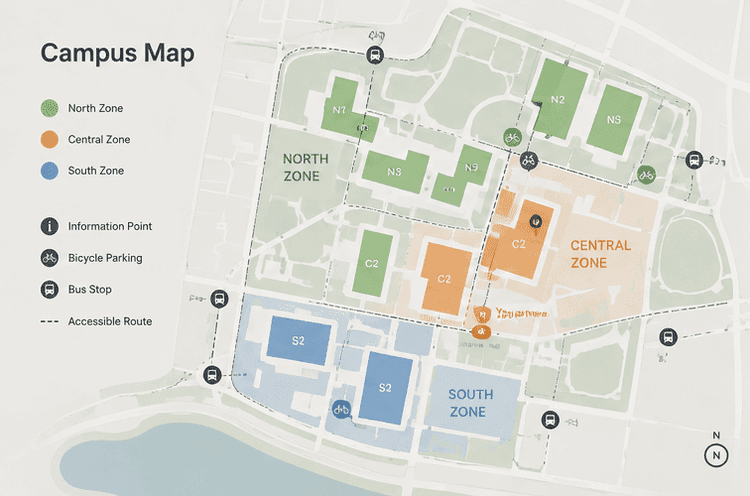
University campuses are complex environments where academic buildings, public spaces, transport infrastructure, and pedestrian networks overlap. As campuses expand, navigating these environments can become increasingly challenging, particularly for new students, visitors, and people with different mobility needs. This project investigates how spatial organisation and wayfinding influence the way people understand and move through a university campus. Particular attention is given to decision points, frequently used routes, and areas where existing spatial information may be insufficient or unclear.
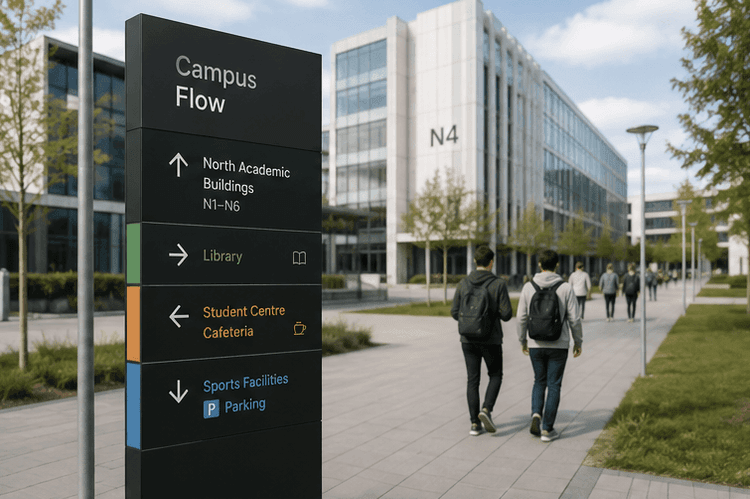
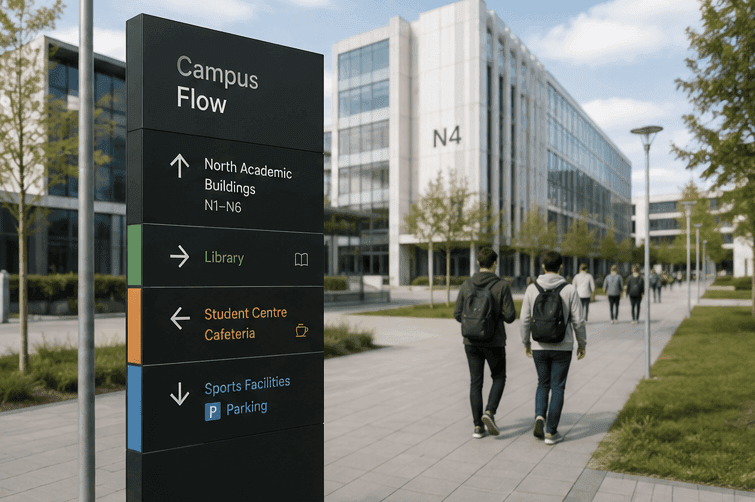
Observation of everyday movement suggests that campus navigation depends on more than directional signage. People use building visibility, landmarks, pathways, environmental cues, and the movement of others to understand where they are and where they need to go. The research explores how these elements can be organised into a coherent wayfinding system. A combination of identifiable campus zones, consistent visual markers, directional information, and clearly defined routes can reduce the amount of information users need to process while navigating unfamiliar environments.
Campus Flow connects walking, cycling, public transport, parking, and accessible routes into one mobility network. A shared visual and spatial system simplifies navigation, improves access, and supports more integrated campus movement.
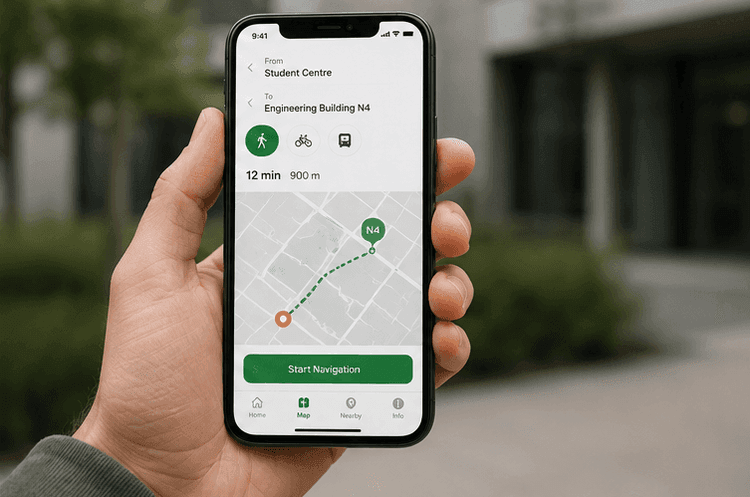
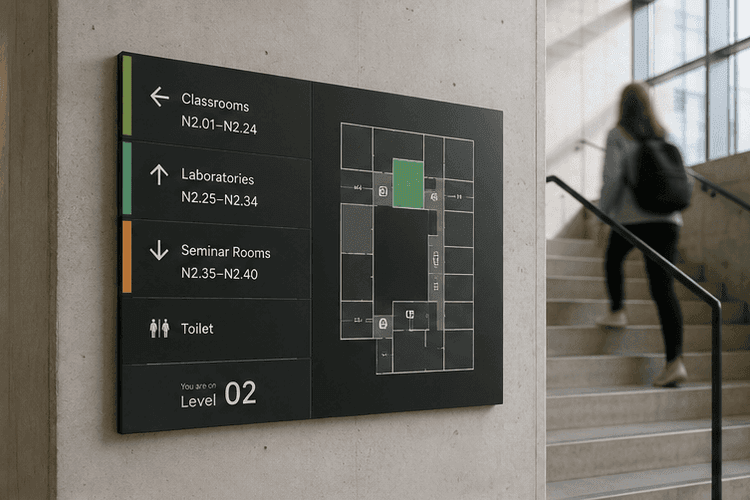
Digital navigation has changed how people approach unfamiliar environments, but physical spatial information remains essential once users enter complex buildings and public spaces. The research therefore considers how digital maps, interactive information points, environmental graphics, and physical signage can complement one another. Maintaining consistent terminology, symbols, colours, and spatial hierarchy across these systems can reduce the disconnect between navigating on a screen and navigating through the physical environment. Rather than replacing traditional wayfinding, digital tools can extend it and create a more responsive navigation system.
01/04