We are preparing this page for you.
Investigating how adjustable forms, physical feedback, and user behaviour can inform the design of everyday objects that respond to different bodies and patterns of use.
Industrial products are often developed around standardized dimensions and assumed patterns of behaviour. Yet the same object may be used by people with significantly different body proportions, physical abilities, habits, and preferences. This research examines what happens when adaptability is considered as a fundamental property of an object rather than an additional feature. Instead of designing around a single ideal user, the study explores products that can accommodate variation through their physical form and interaction.
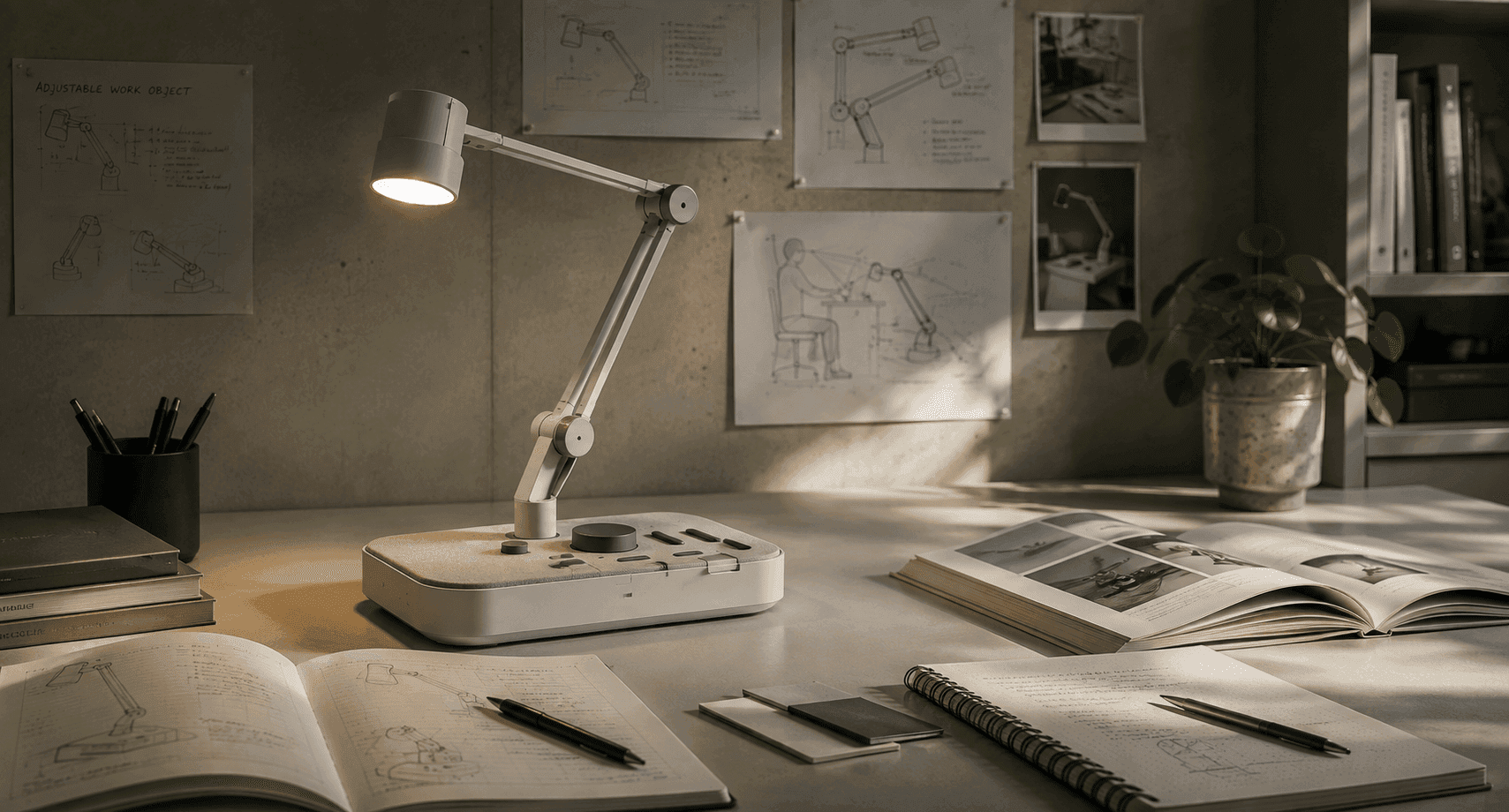
The relationship between a person and an object is shaped by more than dimensions. Weight, resistance, surface texture, balance, reach, and the position of controls all influence how a product is understood and used. Through observation and physical prototyping, the research examines these interactions at the scale of the hand and body. Particular attention is given to moments where users adjust their posture, grip, or movement to compensate for the limitations of an object. These behaviours can reveal opportunities for design that conventional measurements alone may overlook.
Adaptability can be achieved through movement, interchangeable components, flexible materials, or forms that support multiple modes of use.
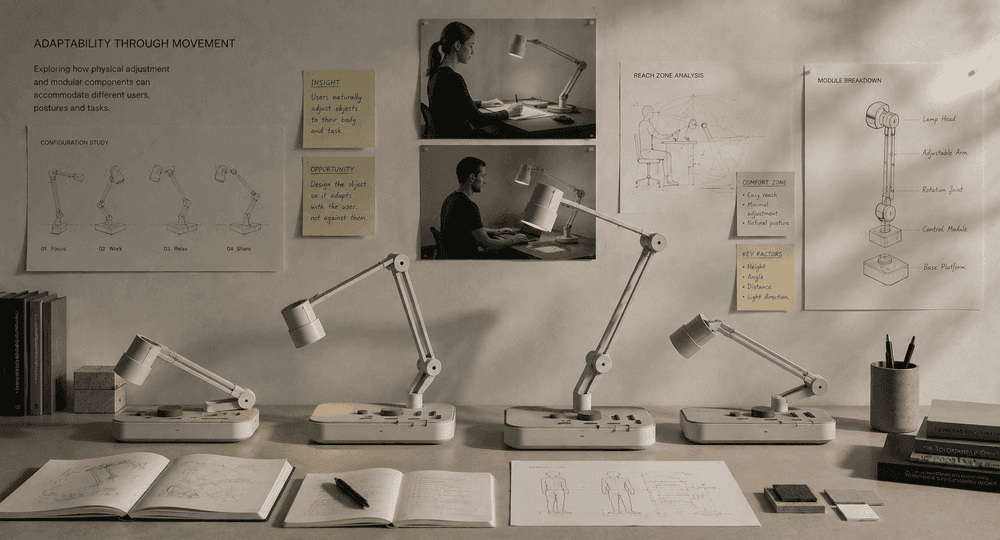
Standardisation remains essential to industrial production, but it does not require every user to experience a product in exactly the same way. The research considers how standardized manufacturing and individual adaptation can coexist. A common structural platform can support adjustable or interchangeable elements, allowing a product to respond to different users while remaining practical to manufacture. This approach positions adaptability as a connection between industrial efficiency and human diversity.