
We are preparing this page for you.
An investigation into how modular construction, repairability, and material choices can extend the useful life of everyday electronic products.
Many everyday electronic products are replaced long before their physical materials reach the end of their useful life. Batteries degrade, individual components fail, software requirements change, or repairs become more expensive and complicated than purchasing a replacement. This research examines product lifespan as an industrial design problem. Rather than focusing only on durability, it considers how decisions made during the design process determine whether a product can be opened, understood, repaired, upgraded, and eventually disassembled.
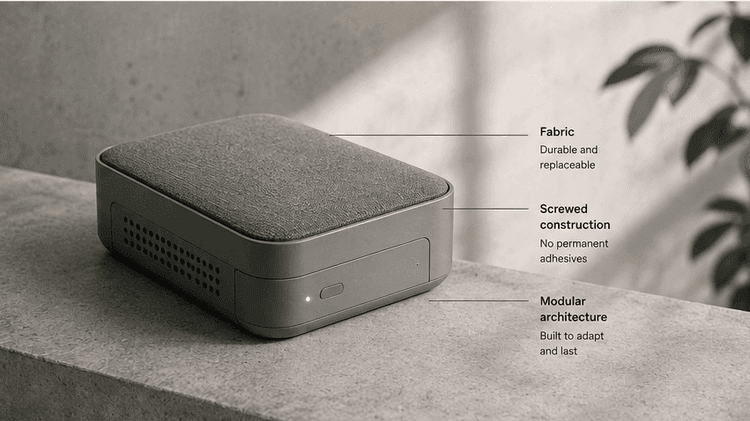
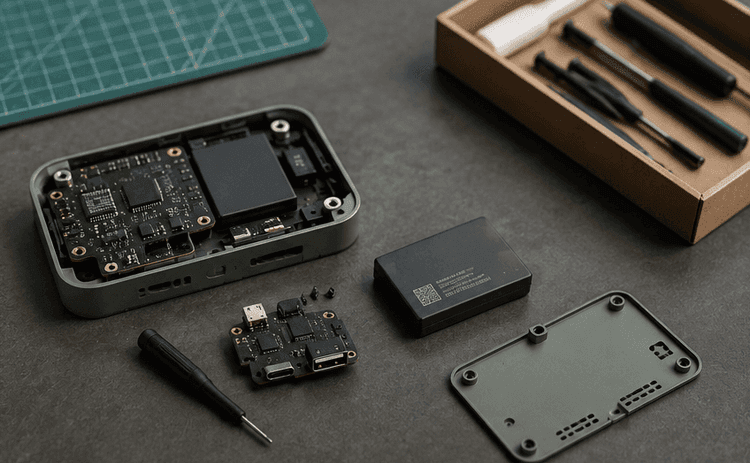
Repairability depends on more than providing replacement components. Product architecture determines how easily individual parts can be accessed without damaging surrounding elements. The study explores alternatives to permanently bonded assemblies, including mechanical fasteners, replaceable modules, accessible batteries, and clearly organised internal components. Making these systems understandable can also change the relationship between the user and the object. A product that communicates how it is assembled becomes less disposable and more capable of adapting over time.
Modularity allows components with different lifespans to be treated independently. A battery may require replacement after several years while the enclosure, controls, and structural elements remain fully functional. Separating these components creates opportunities for maintenance and technological upgrades without requiring the entire object to be discarded. The research considers how modularity can be incorporated without unnecessarily increasing product size, complexity, or material consumption.
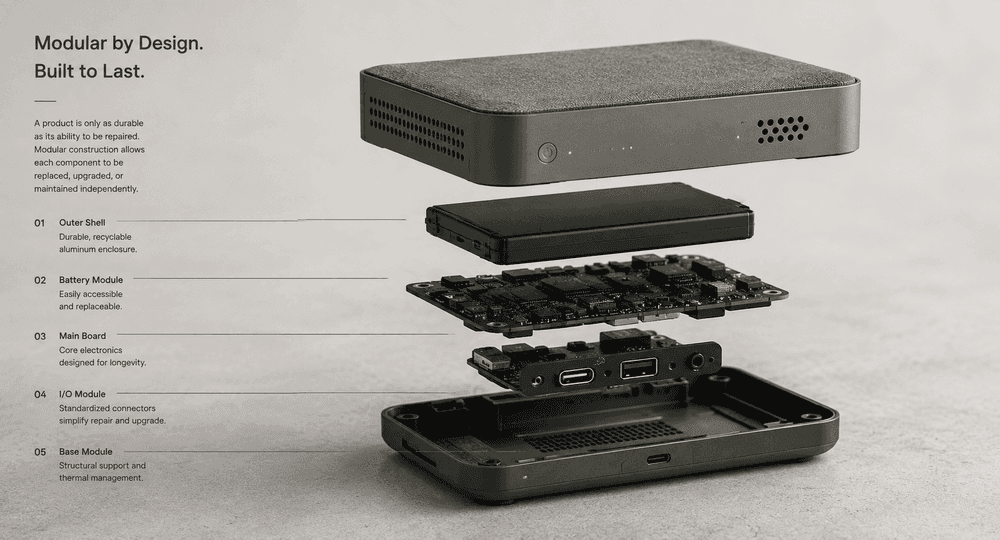
Extending product life is only one part of reducing material waste. Eventually, every manufactured object reaches a point where repair is no longer practical. Material selection and construction methods therefore influence what happens at the end of a product’s useful life. Reducing material combinations, identifying components, and enabling non-destructive disassembly can make materials easier to recover and reuse. The project positions circularity not as an end-of-life intervention, but as a consideration that begins with the first design decision.
01/03